Uncategorized

What we can learn from Donkeys-The symbol of resilience, hard word and quiet wisdom

During the Christmas holidays my friends and I visited a donkey farm in Montenegro and spent the day grooming and walking a pair of them. Memories of December 19, 2016, when a stray donkey appeared in the driveway of my family farm came flooding back. This is an updated and heavily edited post about the stray donkey written a decade ago. However this time I’m able to reveal the things I hid so well then. So much of my life has changed due to my willingness to face some serious pain that I had been burying at the time. Here is a new version with the benefit of hindsight. During that time I’d been searching for the source of buried feelings of frustration, anxiousness and suspicion. I’d often looked to symbolic meanings of the animals I’d encountered for help in navigating what was happening beneath the surface.

That morning the dogs were barking like crazy in the driveway. I was married then and my husband-at-the-time and I went outside with our coffee cups in hand to see what was causing such a ruckus. There stood a gray donkey with his nose in the air looking completely unbothered by the dogs circling his ankles and the humans gawking at him.  I’d had horseback riding lessons under supervision and a pony when I was a kid, but neither of us had had real experience with a donkey other than the miniature burrows giving children rides at birthday parties.

He was huge with fuzzy, silvery fur and a brown cross on his back. He was quite dug into his position and did not move. We had no idea what to do but we were fascinated by him and dying to touch him. My original post was entitled 10 days without touching.  The following is an edited version of that post.

Naturally we wanted to keep him. At the time only the garden and the backyard for the dogs was fenced. The barn housed sprayers, chippers, mowers, blowers, and tillers and had never been used for farm animals.

I assessed how long it would take me to remove from the barn the thousands of things that may be harmful to a donkey. Tiny star-shaped bits of rusted chicken wire, bolts, screws, lumber, fencing and the farm equipment. I calculated how much new fence posts would cost to build a 2 acre donkey pen.

My original post said “Five days before Christmas and a donkey arrives. Is this some sort of comment from the universe?  Donkeys symbolize humility and wisdom. That sounds serious. Not sure how many more lessons in humility and wisdom building opportunities I can handle.”  (Reflecting on this paragraph, I realize how I made light of my feelings. This was mostly for the comfort of others.  Others who were/are not willing to take responsibility for how their actions may have been affecting me; the truth-teller. I joked and normalized and stayed silent not only for the comfort of the perpetrator but because I was terrified to even think of the abandonment that I’d have to face should I decide to confront them with my unmet needs.)

Now, I will no longer abandon myself, my needs, my emotions.  Now, I validate my emotions and am, after 6 years of being alone in the world, facing this terrifying abandonment and doing the necessary deep inner work, owning my story.

“As I moved piles of lumber from the barn floor up to what should be a hayloft, I thought of humility. The song “Radiant beams from they holy face, with the dawn of redeeming grace, Jesus, Lord at thy birth” escaped from my body without my control.” (In this paragraph I refused to address how my religious upbringing was still in my subconscious. I left out how my observations of the so-called Christians that I knew revealed what liars, manipulators and hypocrites they are. Now that they have collectively revealed themselves on the world stage, I am willing to speak up about what I witnessed growing up and how accurate my suspicions were.  I’m ready to give weight to the accuracy of my intuition and let it alone be the proof I kept searching for.)

The Catalan spelling of Catalonia (the part of Spain we’d  lived for a year and a half in the late 90’s) was decided upon for his name-Catalunya. The symbol of Catalonia is the donkey.

He’d seemed comfortable under the large oak near the potting shed and readying the barn was going to take time. So, his warm bucket of water was placed under the oak.  It was 18F degrees outside so I placed it inside a tire and smushed blue foam board pieces around it for insulation to keep the water warm.

The man at the farmer’s co-op said Bermuda hay bales and sweet corn was good for all livestock.  So I placed them near the bucket. My donkey research revealed that sweet corn could cause health problems. But, he moved towards us if I shook the bowl and I needed the bribe temporarily as there was no  touching him much less moving him anywhere except where he’d chosen to go. I calculated vet bills and it seemed donkeys were pretty affordable.

I created a cozy manger of straw with a tarp overhang from lattice that we’d used for bean trellises.  He allowed us near when he was eating and he loved his water. But if we approached otherwise he bucked and turned his rear to us. Bad weather threatened and I anxiously created this temporary shelter while while we reworked the barn. We’d just have to trust him stay overnight by choice. He did.

I moved his water and hay from under his tree to under his new tarp lean-to in order to allow him to get used to a shelter before the arrival of more predicted thunderstorms. Thankfully they’d never materialize in our neck of the woods.

We bought a curry comb, salt lick, cattle gate and hoof pick from the hardware store, and talked to the old vet in town.  That afternoon I was taking a walk with our rottweiler/birddog mix rescue, Zippy. Catalunya came stomping up the driveway trumpeting bloody murder as if to run us down.  My legs felt weak at the thought of him kicking Zip’s head in. We’d just spent $3,000 on a surgery to remove some nasty tumors from his head. Zippy and I had managed to scramble up onto the porch just in time.

I’d taken to carrying a mop handle on my daily dog walks through the trails on the back 50 acres. The woman two ranches over had recently shot and killed a mountain lion in broad daylight and an older gentleman who’d stopped by my farmer’s market booth had shown me a photo of five mountain lions moving through his property. He lives near Wildcat Mountain which edges the back end of our 75 acres. The local word for mountain lion is wildcat.

Walking our paths with the dogs, I had pretended that my mop handle was a machete and that I was Michonne from THE WALKING DEAD. I’d whack at small trees for practice at whacking a mountain lion. But this screaming, unbridled, rogue donkey holding us all hostage in our own backyard was making me feel less safe than the threat of the wildcats roaming the area.

I researched the symbolism of donkeys. They symbolize humility, hard work, resilience and wisdom.  Not stubbornness, as popular culture says. The fact that they remain steadfast rather than fleeing a difficult situation; the fact that they make and trust their own decisions in spite of whatever pressure is applied by outside influences, makes them appear stubborn. But they are brilliant observers, learners, and exhibit high amounts of integrity of action.

Early in the day I’d noticed Catalunya pressing his big Shrek butt against the fence in the clearing beyond the well-house trying to get next to the cows on the other side. He was sulking and stomping and complaining like a toddler. I realized then that he’d been obsessing on the cows possibly because he had been accustomed to being with cows as a watchdog I’d figured. I’d read that donkeys prefer company and can bond for life with other equine but were often placed to guard cattle, sheep and goats.

A few days had passed since he’d arrived and still there had been no petting, no touching, much less bridling and containing. He’d stretch his neck and nostrils as long as they would go without making contact, always maintaining what must have felt like a safe distance for him.  I’d worry all night about what he was stepping on or eating that might kill him as he freely stalked the perimeter of the property.

More bad weather was predicted for Christmas day. I’d have a few days to ready one side of the barn before it was to arrive. It was a large and roomy barn so I sectioned it off down the middle and moved the farm machinery to one side. I’d raked the entire corral yard inch by inch; gone over every inch with a magnet on a stick, hauled buckets of sand and spread it down, added a thick carpet of straw in the paddock and stall area and out into the corral and under the big cedar tree. I’d moved the bucket from under the oak to the barn hoping to lure him in before the predicted storm. 
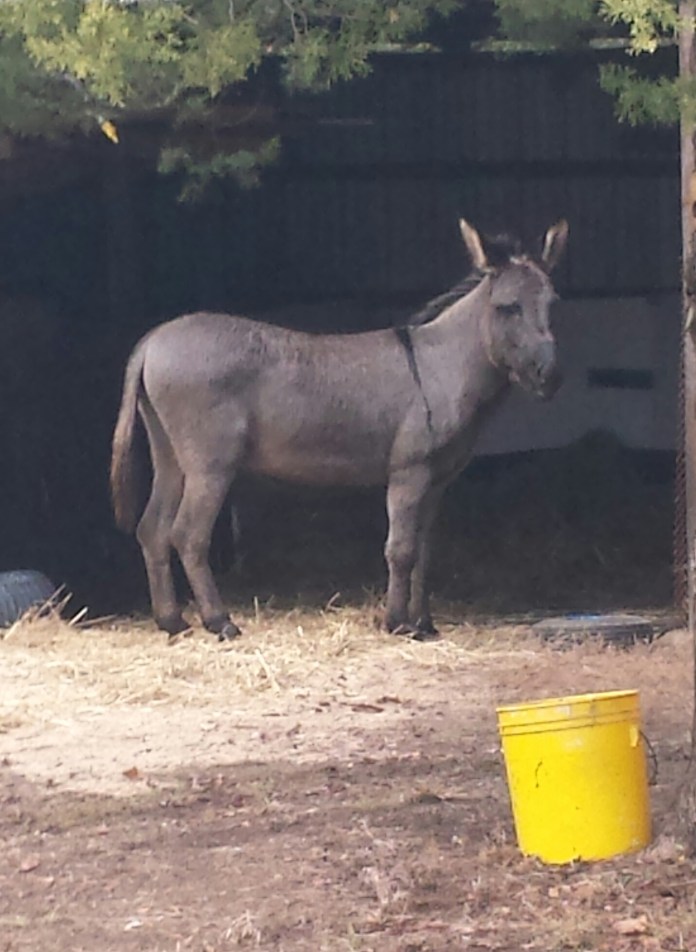
20161224_134923-11

On Christmas Day, around 7am when I began pulling back curtains looking for him, I realized that he’d looked for but did not find his sweet corn and Bermuda hay in the temporary corral by the oak tree and I’d watched him pout off. He would eventually go back to the barn and get accustomed to the new location.

We’d started on the corral fence from the barn wall to the dog fence at 8 am. Alan pounded the stakes into the ground, stretched the hog-wire with a come-along, and set the gate posts in concrete. Beginning around 10am we’d heard the cows bellowing and gunshots scattering through the  morning. Still no donkey.  We’d put down tools and walked to the fence twice worried that he’d jumped the wrong rancher’s fence and had been shot. I worried about the story the mailman had told me of pulling his donkey off of a new baby calf. I’d seen a Youtube video that explained that the donkey must be introduced to the new calves. Otherwise the donkey may interpret the new member as not one of its familiar herd members and treat it as a threat. Catalunya had followed his mail truck up the driveway hee-hawing loudly.

The winds gusted all day and the weather felt like that scene in The Wizard of Oz just as Dorothy leaves the wooden caravan having had her future told by the future wizard.

“In a blizzard he was lost. She ran calling Wildfire, she ran calling Wiiiildfire, she ran calling Wihihihihildfire” ran through my head. It was 67F degrees outside.  He was lost and a storm was coming. Hot and cold air masses were colliding from blizzards on both coasts and I couldn’t control what songs came into my head.

Around 4 pm I’d picked up some boutonniere-sized mistletoe pieces from the soon-to-be corral area. “Merry Christmas, honey.”  I held the mistletoe over our heads and we kissed.  Looking back on this I realize how I initiated every tender moment.  My ex played along and at the time I couldn’t imagine someone would pretend to still love me when they didn’t.  Catalunya would teach me a great deal about interpreting the actions of others and what to do about it in the coming year.

I looked at the mistletoe again and wondered out loud if it was poisonous for donkeys. I Googled it and, of course, it is. Reflecting on this moment reminds me of how I would allow my attention to feelings that were rising in my body to be hijacked by quickly focusing on something else.

In those days I didn’t know how to sit with and process my feelings. I’d quickly moved to worrying about the donkey rather than facing the suspicious feelings I’d get when I’d notice that my ex had not made any attempts to celebrate Christmas with me. The entire emotional load of any special moment rested in my hands and I had allowed that. I’d been shaped by my toxic family to discount, eat, bury and dishonor my valid emotions. If I brought up an injustice I was marginalized as dramatic, hysterical, difficult and always causing problems.

Now I know that this is gaslighting.  The abuser doesn’t want to be held accountable so they minimize your experience and expect you to acquiesce for their comfort. It had been such a familiar part of my family system that I’d continued to remain silent when it occurred in my marriage.

That Christmas I’d asked Alan to cut a little pine from the woods, he did.  Otherwise we’d have had no Christmas tree as he made no attempts to acknowledge the holiday. I’d asked him to drive into town to look at the Christmas lights. He did. He didn’t speak to me the entire time.  I remember looking at the lights and just making myself happy as I’d always done. He wasn’t interested in the lights or doing anything special for Christmas. He was not investing in me or our 27 year long relationship with any measurable action. But he was pretending that everything was normal and still telling me the minimum things he thought I needed to hear to maintain the relationship. I couldn’t understand why anyone would do such a thing. It was so confusing. So, I got drunk on wine in the garden alone each evening and ate my feelings and focused on Catalunya.

After the morning corral work I’d tried to nap and not to cry over the new donkey being possibly dead. He’d been gone since 7ish that morning. I searched Wikipedia for paintings of The Nativity. The only one I found where a donkey appears was in the Botticelli. The others show oxen and lambs. I thought about Mary from Nazareth and Joseph from Bethlehem riding out on the donkey’s back with the baby Jesus fleeing Herod’s Massacre of the Innocents to Egypt just hours after his birth. I thought about the mature Jesus riding on his back on Palm Sunday, choosing a peaceful path to his crucifixion and showing humility by riding a donkey in contrast to a war horse. I knew that Catalunya’s arrival was some sort of cosmic or spiritual sign.  Something inside me was shifting.  I kept trying to figure out what it was.

I rose from my crying jag to find he’d returned and found the warm manger in the barn. Over the prior four days I had recovered 57 iron fence stakes, 18 aluminum posts, 14 wooden fence posts, 3 rolls of hog wire, 2 rolls of barbed wire, and hired some qualified and reasonably priced fence builders. Alan set one of the gates and the remaining side wall fencing which took Catalunya a half a day to accept and yet he nimbly stepped straight through the 6 slat tall cattle gate lying on the ground like he could have won a round of Chinese jump-rope.

He followed me around his new corral with both gates still wide open, around the front yard where his favorite Bermuda grass was turning brown for the winter, down past the chink log cabin, down our path I’d named Pinecone Alley, and back to the path that goes out by the burn barrel. I sang as we walked. He seemed to like it. This was one of the few times that I’d be in an open and unprotected space with him.

It would take 10 days from his arrival before he would allow me to touch him.  And then it had to be done with a long broom handle and a sweater placed over my hand.  He was afraid of hands and I hated to imagine why.  The idea of hiding my hands and using a long stick had come from watching a professional trainer manage abused donkeys.

My grandmother’s words of wisdom when dealing with men came to mind “feed him with a long-handled spoon.” Meaning place enough distance between yourself and the man to keep you safe.

The realization that this would parallel the lack of touch and care that I was receiving and had normalized would come in the years to follow.  I’d have to sell my farm and divorce my husband and put enough distance between myself and him and my toxic family to be able to uncover the ways in which a person should be treated by those who say they love you. My subconscious knew that what was happening was wrong and my nervous system knew something was terribly askew, but I couldn’t then bring it to consciousness.  I didn’t even really have the vocabulary to speak about it. I’d even normalized that we’d been sleeping in separate rooms for maybe a year. We told ourselves it was because of the dogs. Zippy and Dolores is one bed and little Brucie in the other.  I’d normalized years of bread crumbing and the gaslighting that follows when one speaks up and says hey, I deserve better than this. Everything looked normal on the outside.  But my insides were screaming a different story.

Over the coming year, Catalunya would show me the one behavior that I’d not seen from my husband.  The one instinctive characteristic that should be present when one loves another. Integrity.  We defend those who matter to us.  We do not throw them under the bus or leave them unattended when they are being attacked.

But over the coming year, with the guidance of a wise donkey who had also suffered abuse at the hands of those charged with caring for him-I’d slowly and eventually wake up. He was my guide and he proved worthy.

On New Year’s Eve, as I carried warm water to the barn at midnight and the man stayed in bed in his room and read a book, I searched for some words of wisdom to post on Facebook.  I found an Irish proverb. At that time I’d never been to Ireland. The proverb stated:

“Blow out the false, blow in the true, blow out the old, blow in the new.”  A foreshadowing of things to come. By the following New Year’s Eve I’d told him that I would divorce him.  He shrugged.  Proving my suspicion.  Thank God I finally acted on my intuition rather than waiting for him to be honest. By Thanksgiving he’d moved out and I was alone in the middle of nowhere with a bunch of dogs and goats and Catalunya.
Standard
Uncategorized

Minding my own beeswax and taking my own advice.

Local ingredients yields the opportunity to learn new homesteading skills.

This slideshow requires JavaScript.

Our friend, Randy Bulla, a well known blues harp player who has been a touring musician for most of his life, lives on his 92 year old father’s land near the Paris River bottoms between gigs. When he’s in town we play a little music, talk about gourds and lately he brought me some beeswax that he harvested from beneath an old trailer on Pappy’s land. He thought I’d like to try it in a recipe for the latest “farm to salon” beauty product that I’m working on.

I watched a youtube video on rendering beeswax, ruined a few plastic containers and a sauce pan and ended up with 4.7 ounces of beautiful local beeswax!

I have been testing a mint tincture, plantain salve, rosemary hair spray, and a charcoal drawing salve for the past year with great results.  I look forward to working with this local beeswax and bringing new products to the market.

The Farmer’s Market is the perfect field test environment for gaining face to face feedback about products.  And for us newcomers, a great way to meet the more conscious people of the town.  All of the vendors and attendees are the best and brightest that Paris has to offer.

A couple of other lives ago I owned boutiques in Eureka Springs, Arkansas, Austin, Texas, and Barcelona Spain. I started making bath salts and selling them at the counter. I found the Chinese take out containers that I’d used to package the bath salts. I added the blooms and botanicals that I had gathered and dried for the past year and a half to the bath salts recipe from boutique days of yore and put our farm’s logo on it. Found some burlap bags and gourds in the barn, cleaned them up and we were ready for our first Farmer’s Market.

We’d visited the well attended Ft. Smith Farmer’s market and asked a friend who has successfully created a product line which she sells at the award winning Fayetteville Farmer’s Market for some coaching. We bought a tent, folding table and market tea jug and set out. The smaller size of The Paris Farmer’s Market felt comfortable for us newbies.

People really responded to the fresh mint tea (made from mint and stevia grown at Bohemian Farm) that we served at our booth.  The feedback we received regarding our packaging, logo, and aestethic was positive and affirming.

Farmer’s Market Assessment:

Some pop up tents are heavier than others.

There are people on the planet who are unfamiliar with mint tea.

People care about packaging. The months I spent researching and designing our brand paid off.

Beige blooms in the bathtub are less appealing than ones with color.

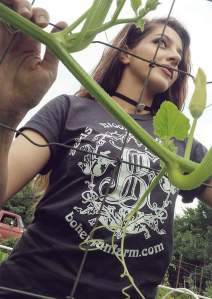
Hire a beautiful friend to model your T-shirt.

My approach to design, styling, and writing skills are valued by my new community. I’ve had the pleasure of contributing my expertise to many projects in town. However, Paris does not share the same population as the larger markets such as Ft. Smith and Fayetteville.

After advising a fellow farmer to look outside of Paris for the recognition and fulfillment she seeks, I’ve decided to take my own advice.


Standard
Uncategorized

Business lessons from harvestsing: How farm fundamentals boosts Business Success

Bohemian Farm Photo shoot

Bohemian Farm Photo shoot

I made my own assessment of my life, and I began to live it.  That was freedom.  Fernando Flores- Chilean Minister of Finance, Engineer, Philosopher

12/21/2025 This is a hugely edited and completely reworked version of the original post )Titled/Dated)

You’re invited to read this entry (post divorce/Bohemian Farm Sale) back to back with the original post (pre-divorce/Bohemian Farm Sale) if you’re interested in transformations.

Assessment 1: We were great at planting and sucky at harvesting.

A friend waiting tables at a new trendy Farm to Table restaurant offered an introduction to the chef. We’d thought to deliver, herbs, micro greens, tomatoes and maybe flowers.

Assessment 2: Our sucky harvesting skills kept us from pursuing this account. What if some of the harvested greens were not harvested on time and half were perfect and half were bitter?  Micro greens need to be harvested several times a day it seems and bolt if they get too hot. We’d used a shade cloth and tried to harvest promptly, but invariably some of the fragile plants bolted. I was so worried about bitterness that I wanted to take a bite of each leaf to check. I’d have eaten my product.

Assessment 3: Tiny tomatoes require more time to harvest than large tomatoes and require more prep for dehydrating than does the prep for blanching a large tomato.

Assessment 4: Some varieties of spinach look like petunia if you do not harvest in time.

Assessment 5: Hot peppers are not as hot as they might be if you harvest too early.

So, our only commercial account (friends Bert and Carly, owners of the award winning hot sauce company http://www.mundisauce.com) needed peppers in July. Our bushes were laden so Bert drove down from Eureka Springs with his kids and we spent an enjoyable evening picking peppers.

Early on I’m in the kitchen making some iced tea for the kids when Alan bursts in followed by Bert chewing on a habanero. Alan: “They aren’t hot”!  Me: “WHAT?” Alan: “Not hot”!  Bert: “Not hot”. I bit into one and felt a burn. I choked and grabbed some tea.  Me: “What do you mean?”  “This is burning my mouth.”  The peppers were not hot enough for Bert’s needs.

Assessment 6: After some research and speaking with chef friends, we realized that we’d harvested too early.  We were/are so excited to work with them and thankfully, they are having a time finding enough hot peppers to fill their orders. So, as ours mature and hopefully heat up, we’ll have the chance to try again.

Assessment 7:  Determining when things are ready for harvest is a learning curve. We’d ping-pong between distractions (outbuildings that need purging; finding replacement parts for the well, preparing soil beds to fill with thinned out daffodil, iris, and lily bulbs), and figuring out what day time was best to harvest each crop meant planning your other tasks around this moment. Some crops do better harvested at certain temperatures so you gotta watch the sun.

Assessment 8: Harvesting/Food prep/Selling soon to follow.  That year we had grown enough produce to put back enough salsa, red sauce, roasted peppers, tomatoes, peas, collards, and squash for the winter, as well as some fresh -picked produce to sell at the Paris Farmer’s Market.

Food prep means blocks of time; pairs of hands, ordering packaging supplies, temperature again is involved, as well as pre-existing funnels for selling the harvest .

My next blog post will assess our Farmer’s Market experience thus far.

Orange beefsteak heirloom tomato with heirloom cherry tomato

Orange beefsteak heirloom tomato with heirloom cherry tomato

sidedoorgarden

sidedoorgarden

Continue reading

Standard
Uncategorized

Plan your work and work your plan

When we decided to pursue earning a living farming, in our case, market gardening for profit, we realized that our daily spinning in circles wouldn’t do.  We’d need a plan.

from my windowsill

When we inherited the garden here, the weeds were at our armpits.  It was a snake pit with purple orbs of garlic blooms floating above yellowed Johnson grass.  Once we got it all whacked down, we found muskmelon, yard long beans, a huge asparagus patch, hundreds of elephant garlic scapes, banana peppers, kidney beans, and a straggling snow pea vine. They were all so happy to be found and nurtured.

Our days were dictated by whomever we glanced at first. “Mexican tarragon on the deck, gone to seed already, needs a trim.  Hostas in the side bed, too close to the mint.  Mint needs to be thinned. Morning glories, taking over the compost, transplant near the front porch“. It guided us rather than the other way around. We felt constantly overwhelmed and hated spending time trying to figure out which task to do when.

The infrastructure was great. Dad had so much homesteading knowledge. I appreciate all of his amazing talents. He was a master mechanic and could build anything, fix anything and was great at long term, large scale planning.  He’d chosen the perfect sunny spot, rabbit proofed and deer proofed the area with proper fencing.  He created a built in compost bin and situated the green house (with electricity) and water spigots near by. The outer edge of the fence is lined with deer resistant lillies and the the martin and bluebird houses are positioned around the perimeter.

We’d read Mother Earth news and Rodale’s Organic Life and Garden and Gun, Backyard Chickens, Modern Farmer, MaryJane’s Farm for years and had spent the past year and a half reading Dad’s gardening library. We felt we’d gained a good amount of knowledge over the years and that the knowledge of our grandparents and parents runs through our veins.

But, in designing our garden, firstly; I wanted it to reflect our tastes rather than our parent’s. What do we eat?  More into black beans than yard long beans.  More into chickpeas than green peas, spaghetti squash rather than summer squash,  purple potatoes rather than white.  Alan is from Georgia and prefers Vidalia onions.  We sweeten our tea with stevia.  We wanted our own citrus, nuts and berries to support our latest “we are getting old and have to obsess on what we put into our bodies” diet.

Secondly; we have to make money. So, What does the market around us want?  Lot’s of Farm to Table networks in the area, so, we’re thinking micro greens, heirloom tomatoes, peppers for our hot sauce account, juniper berries to the cocktail set.  Cut flowers and home decor gifts with a farmhouse vibe.

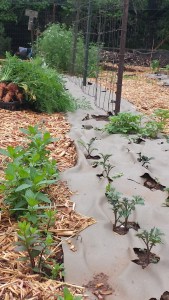
So, how many of what do we need to grow to make money? how do we arrange them in the space to make best use of water, sunlight, soil, fertilizing, pest control and harvesting? The  growveg.com software we purchased in January helped us get on track and working on it in the winter months worked great. Then in March, we started the seedlings in the greehouse, put cardboard down to kill the weeds, built two raised beds outside of the fence when we realized that we needed more space, built trellises for the tomatoes, peas, beans, cucumbers and squash, made string trellises for tomatoes and built up the bed for the potatoes, hauled in tons of organic soil, black cow fertilizer, mixed it with our composted soil and worked the beds with a broadfork. Brown paper was added  to hold in moisture and keep the weeds down and the seedlings and direct sow seeds were watered in. Next up, we’ve ordered the drip irrigation system and shadecloth and hope they arrive before the hail and tornadoes do and will participate in our first Farmer’s Market this Saturday. Here goes nothin’!


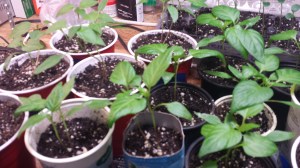
seedlings2016026   20160419_112819


Standard
Uncategorized

Reinventing ourselves, again.

When my father passed away in 2014, my sister and I were forced to figure out what would happen to our family farm in Paris, Arkansas. Neither of us could imagine living in such a rural setting on 75 acres and so far away from a city of any size. What the heck would we do?  
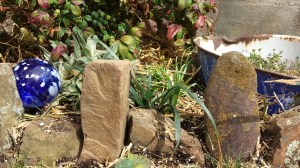
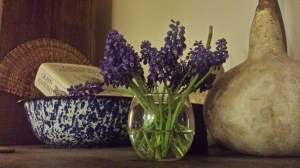
BohoFarmsBlogpost photo gourds hyacinth bluewhite enamel


But as we walked the land the day of Dad’s funeral, I was stirred by its magic.  I explained that night to my husband that although it seemed illogical, I thought we should move there. If for no other reason but to secure this new asset.

Our lease in Eureka Springs, Arkansas was up and we had been looking to buy something with a few acres near the enchanting Victorian Village. We had put an offer in on a TinyHouse with some acreage just outside the Eureka Springs City limits and about 15 minutes after we learned that Dad had terminal lung cancer, we learned that our offer was not accepted. The universe had been conspiring to get us here even then.

 A tourist destination filled with galleries, spas, two writer’s colonies, a monastery and a Harley dealership nestled in the ancient Ozark hills, Eureka is a small burg filled with well-traveled people of vision and visited annually by millions of tourists from around the world. It offers the safety and community spirit of a small town with all of the broad-mindedness of citizens whose fingers are on the pulse of the wider world.  A vibe that is important for my husband and I at our core.  

Leaving our happy jobs and visually stimulating environment surrounded by people who “get us” and moving to an area that lacked the same aforementioned list, proved most terrifying for me. Still, we had not found a place to move into yet and a home of our own again with 75 acres and outbuildings was a dream we’d held since we moved back from Spain.  

We cut our work schedules in half and commuted two hours from the farm in Paris to work in Eureka Springs. We took turns looking after the farm and driving to our jobs. We began living in the house that my Dad built, cleaning out the barn, the potting shed, the green house and out buildings and protecting the estate from being vandalized again. Dad had abandoned the place handed down from his mother for his most recent wife and her 200 acre spread in a county nearby. More stories about that in future posts.

Alan embraced the change of more and more time at the farm more quickly than I was able to do.  There was so much to be done on the property immediately that he barely had a choice. I tortured myself with questions such as “We don’t know anyone! What would we do for social life? Would we be lonely without our peeps?” “If we gave up on Eureka and moved lock, stock, and barrel to the farm, how could we possibly make enough of a living to create a secure future?” “What would we do for jobs? Could we be farmers? At our age; 51 and 64, would we have the back strength necessary to grow the volume of food needed to be able to participate in the local Farmer’s Markets?” The numbers didn’t look good.

Our long time friends know that we reinvent ourselves every so often. Alan has been a bass player, recording artist, hair dresser, boxer and stone mason. I’ve been a voice over artist, actress, musician, handbag designer, children’s entertainer, hairdresser, makeup artist, boutique owner and wardrobe stylist. We’ve lived in Atlanta, Austin, Barcelona, Little Rock, Eureka Springs, collectively, and Coconut Grove and Dallas individually. While Alan and I are always ready for a transformation, even with our varied experiences, this one would be a bit of a stretch.  We didn’t know what a crop matrix was, what all of those tractor implements did, how to create pasture land from forested land, or how we could possibly compete with other River Valley farm families like the very experienced Xiong family down the road. And we wished that we’d been a little more specific with our dreams about the location. Paris, France would’ve suited just fine. Paris, Arkansas?

Our drive from Paris to our jobs in Eureka was largely through a scenic, 2 lane, winding road perched on the sides of massive rock faces with hair pin turns known as the Pig Trail. The drive through the mystical Ozark National Forest is a favorite of sports car and motorcycle enthusiasts. With its scenic look-outs and dense forest surroundings, the drive on Hwy 23 is at once stunning and, terrifying. The fear of fog, deer, landslides, trees falling, flash flooding creeks and visions of distant banjo music wafting in should your car break down at the wrong crook in the road, became too much.

My time at the farm this past year and a half consisted of meeting with bankers, lawyers, accountants, financial planners, extension office representatives, farmer’s co-ops, neighboring farmers and ranchers, experiencing failed crops and successful ones. It has taken me that long to work through the grief of letting go of our idyllic life in Eureka Springs where I knew everyone and what I was doing and to embrace a life we know little about.

It has been the deepest transformation that I’ve ever experienced because of what it represents. Letting go of our lives there represented letting go of old comfort zones and finding the courage to live the less conventional lives that we secretly craved. I had to let go of judging myself by the measure of other’s ideas about me and find the courage to give in to what the small voice was saying. I had to let go of worrying about measuring up to their ideas of how my life should look and jump into the unknown. Not my strong suit, number one. And number two, my friends celebrate my journey and love me as I am. So, I also had to learn to stop imposing complete delusions onto myself. Geez. I have trust issues okay.

The re-invention of myself into someone who trusts herself more than she trusts others to know what is best for her was a deeply frightening personal hurdle for me. I had to learn to experience the planet sans the force of my father’s existence, and give in to the illogical conclusion that we want to live in the middle of nowhere, in my Dad’s house, and become farmers .

The new plan is the subject of a future post.  Stay tuned.       

bizcardNoBrown


Standard
Uncategorized

About Bohemian Farm

I am the third generation to live on this family land in Paris, Arkansas.  Located in The River Valley, nestled between the Boston and Ozark Mountains, Paris is home to Mt. Magazine and is the highest point in Arkansas.

My farm is named after a true Bohemian, my grandmother Ida.  She handed the 77 acres down to my father and after I inherited 74 acres and the homestead, I changed my life and moved to the farm.


Our focus now is on harvesting our juniper berries for wholesale to makers of simple syrups and eventually gin and our hot peppers for wholesale to makers of a local hot sauce. We also grow and sell seed crops from our heirloom vegetables, flowers and shrubs. We also sell pods, branches, twigs, cones, pressed flowers, dried flowers and dried herbs at farmer’s markets and on Etsy.

We hope to add a herd of alpaca this spring.bizcardNoBrown

Standard